What tokenized trade finance invoices are
Tokenized trade finance invoices turn outstanding receivables into digital tokens on a blockchain. Instead of waiting 30 to 90 days for a buyer to pay, suppliers can use these tokens to access immediate liquidity. Lenders can then buy or hold these tokens, securing their position with transparent, immutable records.
For small and medium-sized enterprises (SMEs), this process solves a cash flow bottleneck. Traditional invoice financing often involves heavy paperwork and slow verification. Tokenization automates much of that verification. The underlying blockchain records the invoice's existence, terms, and payment status in real time.
This setup benefits lenders too. They get a clear view of the asset's history without relying solely on the borrower's word. It reduces the risk of double-financing, where the same invoice is used to secure multiple loans. The result is a faster, more reliable way to move capital in trade finance.
The value proposition is straightforward. Suppliers get cash when they need it, not when the buyer decides to pay. Lenders get a secure, auditable asset. The system removes friction from the middle, allowing trade to happen at the speed of business rather than the speed of paperwork.
Set up the legal and technical infrastructure
Before you tokenize trade finance invoices, you need to establish a secure legal and technical foundation. This phase bridges the gap between traditional banking regulations and blockchain innovation. Skipping these prerequisites can lead to regulatory friction or technical failures.
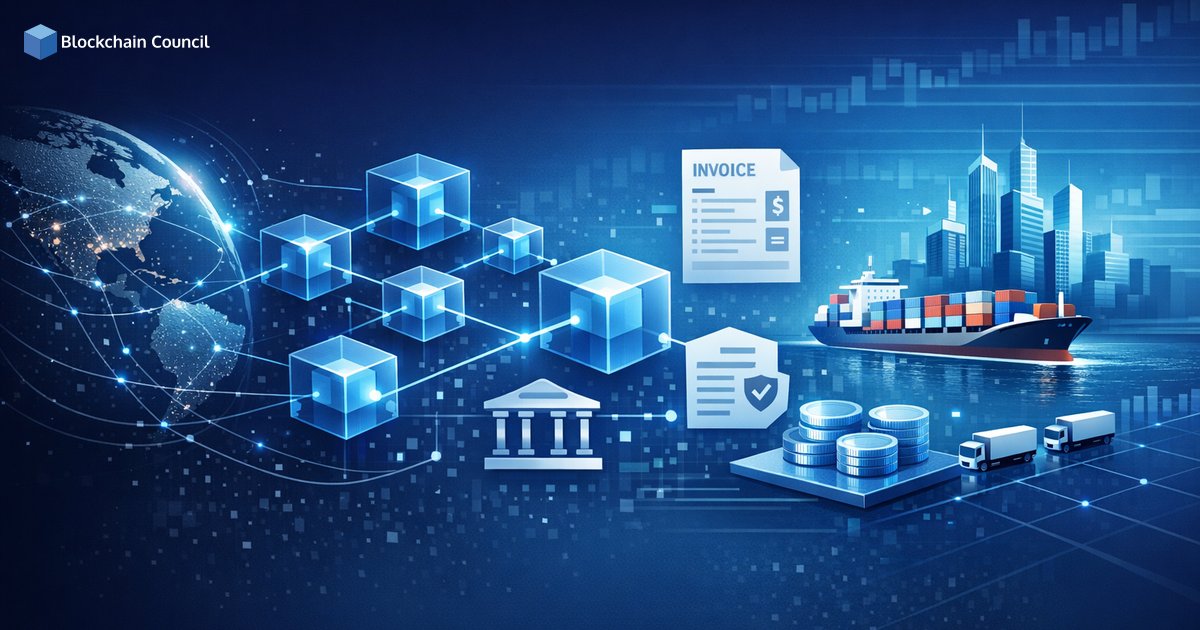
Create a separate legal entity, often an SPV, to hold the underlying invoices. This isolates the assets from the originator’s balance sheet, ensuring that if the originator goes bankrupt, the investors’ assets remain protected. This structure is critical for compliance with securities laws and for giving lenders confidence in the token’s validity.
Develop smart contracts that automate the lifecycle of the invoice tokens. These contracts should handle issuance, transfer, and redemption. They must explicitly define who has the authority to approve payments and how disputes are resolved. Ensure these contracts are audited by a reputable firm before deployment to prevent vulnerabilities.

Choose a blockchain that aligns with your compliance needs. Permissioned blockchains like Hyperledger or Corda are often preferred in trade finance because they restrict access to known, vetted participants. Public blockchains offer more transparency but may struggle with privacy requirements and transaction costs for high-volume trade data.

Connect your blockchain to real-world data using oracles. These bridges verify that the invoice exists and that payment terms are met. Without reliable oracles, the smart contracts cannot automatically trigger payments or update token statuses based on actual trade events.
This setup ensures that your tokenized trade finance invoices are not just technically sound but also legally robust, protecting all parties involved in the transaction.
Execute the tokenization workflow
Converting a physical invoice into a digital token requires a structured workflow that bridges traditional finance with blockchain infrastructure. This process transforms a static PDF or paper document into a dynamic, programmable asset that can be tracked, financed, and settled on-chain. The following steps outline the standard operational sequence for tokenizing a trade receivable.
Begin by digitizing the physical invoice. This involves extracting key data points—such as invoice number, due date, amount, and counterparty details—using optical character recognition (OCR) or manual entry. The data must be validated against underlying trade documents (like bills of lading or purchase orders) to ensure authenticity. This verification step is critical; the token’s value is entirely dependent on the accuracy of the underlying asset data.
Select the appropriate blockchain protocol and token standard (e.g., ERC-3643 for security tokens or ERC-721/1155 for unique assets). Draft the smart contract to encode the invoice’s terms, including payment conditions, interest rates, and transfer restrictions. Compliance features, such as KYC/AML checks, are often embedded directly into the contract logic to ensure only permitted investors can hold or trade the token.
Once the smart contract is deployed and verified, mint the token. This action creates a unique digital identifier on the blockchain that represents the invoice. The token is linked to the hashed data of the original invoice, creating an immutable record. At this stage, the token is issued to the originator’s wallet, effectively converting the receivable into a liquid, on-chain asset.
The token can now be distributed to investors, lenders, or secondary market participants. Smart contracts automate the distribution of payments when the invoice matures. If the invoice is traded, the token transfers ownership instantly on the ledger. This step enables fractional ownership, allowing multiple investors to fund a single invoice, thereby increasing liquidity for the original seller.
Manage risks and compliance checks
Tokenized trade finance invoices carry the same legal weight as their paper predecessors, but the digital nature of the ledger introduces specific vulnerabilities you must manage. The primary risk is duplicate presentation: the same underlying invoice being financed or sold multiple times across different platforms or ledgers. Because tokens are programmable, you can enforce uniqueness, but only if your workflow verifies the asset’s state before every transaction.
Always verify invoice uniqueness on-chain to prevent double-financing fraud.
Start by checking the token’s metadata and ownership history. If the invoice is already marked as "paid" or "transferred" in the source registry, the token should be invalid or locked. BNY’s research on tokenization highlights that this transparency over ownership history is a core benefit, reducing the risk of duplicate presentation significantly compared to traditional paper-based systems. You are not just trusting a counterparty; you are trusting the immutable record.
Next, ensure your smart contracts handle regulatory compliance automatically. This means embedding Know Your Customer (KYC) and Anti-Money Laundering (AML) checks directly into the transfer logic. If a buyer is not whitelisted, the token transfer should fail at the protocol level, not just at the user interface. This reduces operational friction and ensures that only compliant entities can hold or trade the invoice token.
Finally, monitor for off-chain discrepancies. A token is only as good as the real-world asset it represents. If the underlying invoice is disputed or the goods were not delivered, the token’s value collapses. Establish a clear dispute resolution mechanism that can pause or reverse token transfers if the underlying trade documentation is flagged as invalid. This hybrid approach—combining on-chain automation with off-chain verification—is essential for managing risk in tokenized trade finance.
Review common tokenization mistakes
Tokenizing a trade finance invoice is technically straightforward, but operational pitfalls can sink the liquidity you’re trying to unlock. The most frequent errors stem from treating the blockchain as a magic fix for broken underlying data or ignoring how buyers actually pay. If the foundation is weak, the token is worthless.
Poor data quality breaks the chain
Smart contracts execute exactly what they are told; they cannot judge the validity of a commercial dispute. If your invoice data contains errors, missing attachments, or unclear payment terms, the token will simply propagate those errors across the network. This creates "garbage in, garbage out" scenarios where lenders refuse to accept the token because the underlying asset is ambiguous.
Ignoring liquidity limits to account for
A tokenized invoice is only as good as the market that buys it. Many projects fail because they tokenize invoices without securing a secondary market or a committed pool of capital. If suppliers cannot easily sell the token at a discount to raise cash, the tool fails its primary purpose: unlocking working capital. You must ensure there is actual demand for the tokenized asset before minting.
Skipping legal verification
Tokenization does not erase legal realities. The token must represent a legally enforceable claim on the underlying invoice. If the smart contract does not properly link to the original legal agreement or if jurisdictional issues are ignored, the token may hold no legal weight in a default scenario. Always verify that the legal framework supports the digital representation.
Tokenized Trade Finance Invoice FAQs
Tokenized trade finance invoices are digital representations of outstanding receivables on a blockchain. This process converts paper or traditional digital invoices into tokens that can be used as collateral for immediate funding, speeding up cash flow for suppliers.
What is the main downside of tokenization?
The primary downside is complexity and regulatory uncertainty. Unlike traditional finance, which operates under established global frameworks, tokenization involves navigating evolving blockchain regulations and integrating new technical infrastructure, which can be costly and risky for traditional institutions.
How does tokenization differ from traditional trade finance?
Traditional trade finance relies on banks, letters of credit, and manual verification, which can take days or weeks. Tokenization automates this via smart contracts and shared ledgers, reducing settlement times from weeks to minutes and lowering administrative overhead.
What are the key differences between trade finance and invoice finance?
Trade finance generally covers the entire import/export process, including logistics and customs, while invoice finance is specifically focused on unlocking cash tied up in unpaid invoices. Tokenization can apply to both, but it is most commonly used to streamline the invoice financing aspect of trade.
No comments yet. Be the first to share your thoughts!