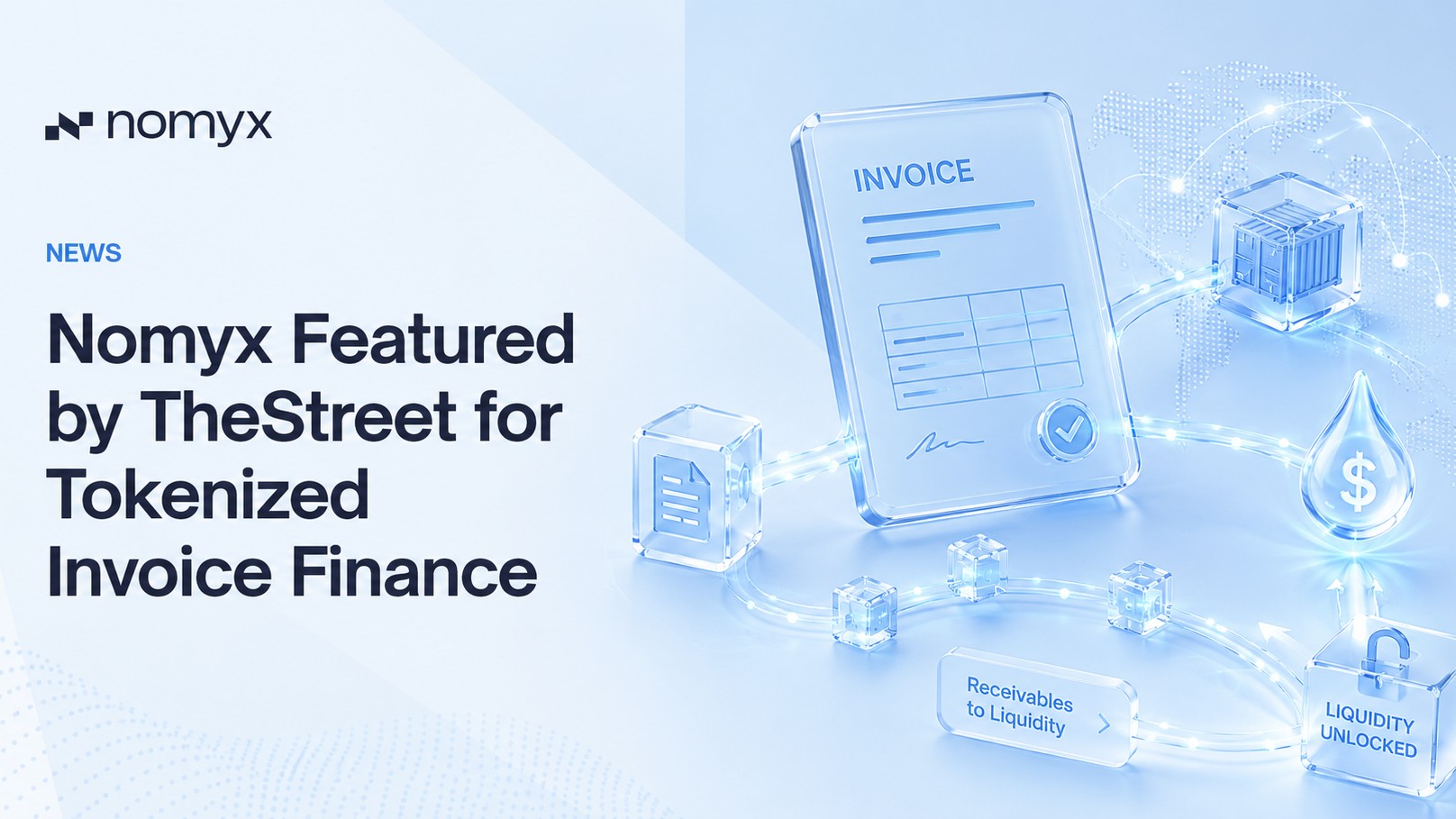
What tokenized trade finance invoices actually are
Tokenized trade finance invoices convert unpaid trade receivables into digital tokens, enabling fractional ownership and secondary market trading previously reserved for large banks.
At their core, tokenized invoices are digital representations of traditional trade finance assets. When a business issues an invoice for goods or services, that unpaid claim becomes a token on a blockchain. This process transforms illiquid receivables into liquid, tradable digital assets. Unlike traditional factoring, where a single institution buys the entire receivable at a discount, tokenization allows the invoice to be split into smaller fractions.
This fractionalization opens the asset class to a broader range of investors. Previously, access to trade receivables was largely restricted to large institutional banks due to high minimum investment thresholds and complex documentation. Tokenization lowers these barriers, allowing smaller investors to participate in what was once an exclusive market. This shift creates a more efficient secondary market where invoices can be bought and sold with greater ease.
The technology also enhances transparency and efficiency. By recording the invoice on a blockchain, all parties can track the status of the payment in real time. This reduces the administrative burden and the risk of fraud associated with traditional paper-based processes. For businesses, it means faster access to capital; for investors, it offers a new way to diversify their portfolios with tangible, short-term assets.
The technical stack for onchain trade finance
Tokenizing trade finance invoices requires a bridge between traditional banking infrastructure and public blockchain rails. The architecture relies on three core components: a settlement layer for the token, an oracle network to verify real-world data, and smart contract standards to manage the asset lifecycle. Without this triad, onchain trade finance remains speculative rather than operational.
Blockchain rails and settlement layers
The choice of blockchain determines settlement speed, finality, and compliance capabilities. While Ethereum remains the dominant layer for complex DeFi integrations, many trade finance platforms prefer permissioned ledgers or Layer 2 solutions to manage transaction costs and ensure regulatory adherence. The token itself must be compliant with existing financial standards, often utilizing ERC-3643 or similar security token standards that embed identity checks directly into the contract code.
Oracle networks for data verification
The most significant hurdle in tokenizing real-world assets is proving that the off-chain invoice exists and is valid. Oracle networks like Chainlink act as the trusted bridge, feeding verified invoice data from traditional banking systems onto the blockchain. This process involves aggregating data from multiple sources to prevent single points of failure, ensuring that the token’s value is backed by authentic, auditable trade documents rather than unverified claims.
Smart contract standards and automation
Smart contracts automate the lifecycle of the tokenized invoice, from issuance and transfer to repayment and redemption. These contracts enforce the terms of the trade finance agreement, automatically releasing funds when predefined conditions are met. This reduces counterparty risk and eliminates the need for manual reconciliation, which is a major bottleneck in traditional trade finance.
The integration of these technologies creates a transparent, efficient market for trade finance. As institutional adoption grows, the infrastructure will become more standardized, reducing friction and increasing liquidity for tokenized invoices.
Who buys and who sells in tokenized invoice markets
Tokenized trade finance creates a two-sided marketplace that reconnects small businesses with capital providers. On the supply side, small and medium-sized enterprises (SMEs) issue tokenized invoices to access working capital. On the demand side, institutional and retail investors buy these digital assets to earn yield. This structure transforms traditional receivables into liquid, tradable instruments.
The supply side: SMEs seeking liquidity
For many SMEs, waiting 30 to 90 days for client payments creates a cash flow gap. Traditional factoring often involves high fees, lengthy paperwork, and limited access. Tokenization solves this by converting unpaid invoices into digital tokens that represent a claim on future payment.
SMEs can list these tokens on digital marketplaces, bypassing the slow processes of traditional banks. The tokens are backed by real trade transactions, offering a tangible asset rather than speculative value. This allows smaller businesses to access capital faster and at a lower cost than conventional lending options.
The demand side: Investors seeking yield
Investors are drawn to tokenized invoices because they offer a new asset class with predictable returns. Unlike volatile cryptocurrencies, these tokens are backed by real-world trade receivables. This reduces risk and provides a steady income stream from the underlying commercial transactions.
Institutional investors, such as hedge funds and private credit firms, use tokenization to diversify their portfolios. Retail investors can also participate, often with lower minimum investment thresholds than traditional private credit funds. The transparency of blockchain technology allows investors to track the status of each invoice in real time.
Market mechanics: Speed and transparency
The interaction between suppliers and investors is defined by efficiency and visibility. Tokenization removes intermediaries, reducing the time it takes to fund an invoice from weeks to hours. Smart contracts automate the payment process, ensuring that when a buyer pays the invoice, the investor receives their principal and yield automatically.
This efficiency is a significant shift from traditional finance. The following table compares the operational differences between traditional factoring and tokenized markets.
| Feature | Traditional Factoring | Tokenized Invoice Markets |
|---|---|---|
| Settlement Speed | 1-5 business days | Minutes to hours |
| Accessibility | Limited to large banks | Open to institutions and retail |
| Transparency | Opaque, manual tracking | Real-time blockchain visibility |
| Minimum Investment | High (institutional only) | Low (fractional ownership) |
Strategic considerations for adoption
Adopting tokenized trade finance invoices requires moving beyond the initial excitement of blockchain infrastructure to address the concrete mechanics of regulatory compliance, security, and market entry. For businesses and investors, the shift from traditional letters of credit to digital tokens is not merely a technological upgrade; it is a fundamental restructuring of credit risk and liquidity management.
Before integrating tokenized invoices into your treasury or investment strategy, you must navigate a landscape where regulatory frameworks are still maturing. The primary hurdle is ensuring that the tokenization platform adheres to existing financial regulations, such as anti-money laundering (AML) and know-your-customer (KYC) requirements. Without robust compliance layers, the liquidity benefits of tokenization are outweighed by legal exposure. Additionally, security is paramount. The smart contracts governing these invoices must be audited rigorously, and the underlying asset verification process must be transparent to prevent double-spending or fraudulent claims.
Assessing platform infrastructure and liquidity
The first step is evaluating the technological backbone of the tokenization provider. Not all platforms are built equally. You need to verify the reliability of the oracles that feed real-world invoice data onto the blockchain. If the oracle fails to accurately reflect the status of an underlying invoice, the token becomes worthless. Additionally, assess the depth of the secondary market. Tokenization is only valuable if there is genuine liquidity for investors to buy and sell these invoices. A platform with strong technology but no active market will leave your capital trapped.
Navigating regulatory compliance
Regulatory clarity varies significantly across jurisdictions. In some regions, tokenized invoices may be classified as securities, requiring strict registration and reporting. In others, they might fall under new digital asset frameworks. Engage legal counsel specializing in fintech to determine the specific compliance obligations for your business. This includes understanding the tax implications of tokenized assets and ensuring that your smart contract architecture complies with local financial laws. Ignoring this step can lead to severe penalties or the freezing of assets.
Implementing security and risk management
Security in tokenized trade finance extends beyond cybersecurity. It involves the integrity of the underlying trade. Implement multi-signature wallets for treasury management and ensure that the platform uses decentralized identity solutions to verify the parties involved in the trade. Regular audits of the smart contracts are non-negotiable. Additionally, establish a risk management framework that defines your exposure limits to tokenized assets. Diversify across multiple platforms and invoice origins to mitigate counterparty risk.
Planning the market entry
Finally, develop a phased rollout strategy. Start with a pilot program involving a small subset of trusted suppliers and investors. This allows you to test the operational workflow, identify bottlenecks, and build confidence among stakeholders. Monitor key performance indicators such as settlement time, cost savings, and investor participation. Use these insights to refine your approach before scaling to a broader range of invoices and partners. A cautious, data-driven entry minimizes disruption and maximizes the potential for long-term success in the tokenized trade finance ecosystem.
No comments yet. Be the first to share your thoughts!