Tokenized trade finance invoices limits to account for
The market for tokenized trade finance assets is expanding rapidly, with valuations projected to grow from $3.8 billion in 2025 to $24.6 billion by 2034. This growth is driven by the ability to transform illiquid debt into tradable on-chain assets, opening access to investors who were previously restricted to large institutional banks. However, this shift is not without significant friction.
The primary constraint lies in the complexity of integration. Tokenization requires bridging traditional trade finance instruments—such as letters of credit and warehouse receipts—with blockchain infrastructure. This process demands rigorous legal frameworks to ensure that the digital tokens accurately represent claims on future payments or ownership rights. Without standardized protocols, the risk of mismatched data and regulatory non-compliance remains high.
Additionally, liquidity is often fragmented across different blockchain networks. While tokenization promises faster financing and yield generation, the actual ease of trading depends on the existence of robust secondary markets. For many businesses, the cost of implementing these systems still outweighs the immediate benefits, limiting widespread adoption to those with the capital to plan around the technical and regulatory hurdles.
Evaluating trade finance tokenization choices that change the plan
Tokenized trade finance invoices promise liquidity, but the infrastructure is still maturing. Before integrating these tools into your treasury strategy, you need to weigh concrete operational risks against the benefits of faster settlement and broader investor access.
The core tension lies between the efficiency gains of blockchain and the regulatory friction of traditional finance. You are trading the familiarity of letters of credit for programmable smart contracts. This shift requires new technical competencies and a different risk management framework.
Liquidity and Market Depth
The most significant advantage is access to a broader pool of capital. Traditional trade finance is dominated by large banks, but tokenization opens the market to institutional and accredited investors. This democratization can lower borrowing costs for small and mid-sized enterprises. However, secondary market liquidity remains uneven. Unlike public equities, tokenized invoices do not trade on deep, continuous exchanges. You may face slippage or difficulty exiting positions quickly during market stress.
Regulatory and Compliance Risks
Tokenization operates in a regulatory gray area in many jurisdictions. While some regions have clear frameworks, others lack specific guidance on digital asset securities. This uncertainty can delay settlements and increase legal costs. You must ensure that the tokenization platform complies with anti-money laundering (AML) and know-your-customer (KYC) requirements. Non-compliance can result in frozen assets or legal penalties. The lack of standardized global regulations also complicates cross-border transactions.
Technical and Operational Complexity
Implementing tokenization requires robust IT infrastructure and integration with existing enterprise resource planning (ERP) systems. This can be costly and time-consuming. Smart contracts are immutable; once deployed, errors cannot be easily fixed. This introduces operational risk if the code contains bugs or vulnerabilities. Additionally, the reliance on blockchain technology means that network congestion or protocol upgrades can impact settlement times. You need to assess the technical maturity of the platform provider before committing.
Transparency and Data Integrity
Blockchain offers a transparent ledger, which can reduce fraud and disputes. All transactions are recorded and verifiable, providing a clear audit trail. This transparency can build trust between buyers, sellers, and financiers. However, the data on the blockchain is only as good as the data entered. If the underlying invoice data is inaccurate or manipulated, the token will reflect that error. This is known as the "garbage in, garbage out" problem. You must ensure that the data sources are reliable and that there are mechanisms to verify the authenticity of the underlying trade documents.
| Factor | Tokenized | Traditional |
|---|---|---|
| Settlement Time | Near-instant | 3-10 days |
| Access to Capital | Broad investor base | Bank-dominated |
| Regulatory Clarity | Evolving/Uncertain | Established |
| Operational Cost | Lower marginal cost | High fixed cost |
| Liquidity | Limited secondary market | Low secondary market |
How to evaluate tokenized trade finance infrastructure
Tokenized trade finance assets are projected to grow from $3.8 billion in 2025 to $24.6 billion by 2034, driven by a 23.1% CAGR [src-serp-1]. This expansion signals a shift from experimental pilots to production-ready infrastructure. To capitalize, you must evaluate tools based on liquidity, security, and regulatory alignment.
Unlike traditional trade finance, which often locks capital for months, tokenized invoices transform illiquid debt into tradable assets. Look for platforms that offer secondary markets where investors can buy and sell these tokens. This liquidity is critical for businesses needing faster access to working capital and for investors seeking yield on real-world economic activity [src-serp-2].
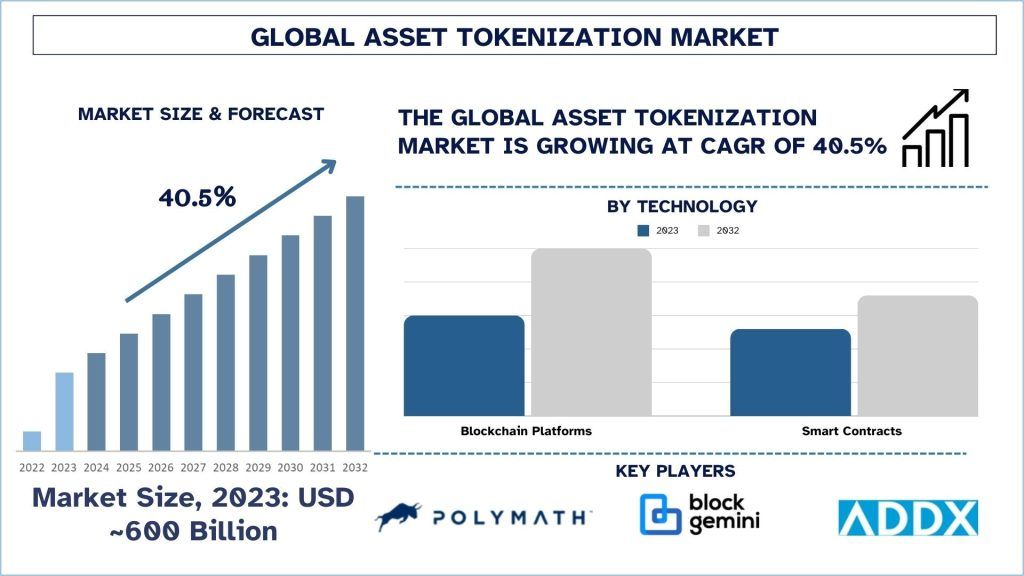
Tokenization involves converting receivables, letters of credit, and warehouse receipts into blockchain-based digital assets [src-serp-3]. Ensure the infrastructure complies with relevant financial regulations, such as KYC/AML requirements. Non-compliant platforms pose significant legal risks and may face shutdowns, jeopardizing your investment or financing strategy.

Choose platforms that support major blockchains and standard token formats (e.g., ERC-3643, ERC-1400). Interoperability allows you to move assets between different trading venues and liquidity providers. Avoid proprietary systems that lock you into a single ecosystem, limiting your ability to optimize financing terms.


As an Amazon Associate, we may earn from qualifying purchases.
Key considerations for adoption
Before committing to a tokenized trade finance solution, consider the downsides. Regulatory uncertainty remains a primary concern, as laws vary significantly across jurisdictions. Additionally, technological risks, such as smart contract vulnerabilities, require robust auditing and insurance coverage.
Spot the Weak Links in Tokenized Invoice Claims
The tokenized trade finance market is projected to grow from $3.8 billion in 2025 to $24.6 billion by 2034, but the path there is littered with overpromising platforms and misunderstood mechanics. While tokenization converts illiquid trade receivables into onchain assets, many tools fail to address the core friction points of legal enforceability and data verification.
Investors and businesses often confuse the novelty of the blockchain layer with the quality of the underlying asset. A token is only as good as the legal framework that backs the claim. When evaluating platforms, look for those that prioritize traditional legal structures over technological flair.
Avoid platforms that promise instant liquidity without explaining the settlement logic. The real value lies in the infrastructure that connects onchain tokens to offchain legal reality, not in the speed of the transaction. Focus on tools that provide transparency into the invoice's origin and the borrower's creditworthiness.
Tokenized trade finance invoices: frequently asked: what to check next
Investors and treasury teams evaluating tokenized trade finance invoices need to understand the mechanics, risks, and market realities before allocating capital. These questions address the most common practical objections and technical clarifications.
No comments yet. Be the first to share your thoughts!