Why tokenized invoices matter now
Trade finance has long been a walled garden. For decades, the market for trade receivables was dominated by large institutional banks, with entry barriers that kept smaller players and retail investors on the outside. Tokenized invoices are breaking down those walls, transforming a $10 trillion+ market into an accessible asset class.
The shift is driven by the need for liquidity. Traditional trade finance involves long payment terms—often 60 to 90 days—tying up capital for suppliers. By tokenizing these invoices, the underlying receivables are split into digital shares that can be traded on secondary markets. This allows multiple investors to fund portions of an invoice, providing immediate cash to the supplier while offering investors a new, tangible yield source.
For institutional and retail investors alike, this represents a structural change in how trade finance is accessed. Instead of relying on opaque, bank-led syndicates, capital can flow directly into specific, verified trade assets. This democratization of access is not just a technological upgrade; it is a fundamental rethinking of how global trade is funded.
How tokenization infrastructure works
Tokenizing a trade finance invoice is not about creating a new asset from thin air; it is about translating a physical or digital document into a language that blockchains understand. The process begins with data tokenization, where off-chain invoices, bills of lading, and trade credits are converted into secure, tradable digital tokens on a ledger. This translation layer is what allows traditional trade assets to move through modern financial rails.
The role of oracles in bridging worlds
The biggest risk in tokenized trade finance is the gap between the physical world and the digital ledger. An invoice represents a real-world obligation—goods shipped, services rendered—but the blockchain cannot see the shipping container. This is where oracles come in. They act as the trusted bridge, verifying that the off-chain data (the invoice) matches the on-chain reality.
Without reliable oracles, a tokenized invoice is just a speculative bet. The oracle ensures that the token’s value and validity are anchored to actual trade events. If the goods are delayed or the invoice is disputed, the oracle updates the smart contract accordingly, preventing fraud and maintaining trust in the tokenized asset.
Smart contract settlement
Once the invoice is tokenized and verified, smart contracts handle the settlement. These self-executing agreements automate the payment terms. When predefined conditions are met—such as the arrival of goods at a port—the smart contract triggers the transfer of funds or the transfer of token ownership. This reduces the need for intermediaries like banks or clearinghouses, speeding up settlement from days to minutes.
The infrastructure relies on interoperability to function smoothly. Tokenized trade finance systems must integrate with legacy banking systems and existing supply chain platforms. This seamless integration ensures that the tokenized asset can be tracked, traded, and settled across different networks without breaking the chain of custody.
The infrastructure is only as strong as its weakest link. If the oracle fails to update, or the smart contract has a bug, the entire tokenized asset becomes vulnerable. Therefore, the focus is on robust, audited code and reliable data feeds. This technical foundation is what makes tokenized trade finance a viable alternative to traditional, paper-based trade finance.
Mapping the Tokenized Trade Finance Landscape
The infrastructure supporting tokenized trade finance invoices is evolving from experimental pilots to established, multi-layered platforms. Unlike traditional banking silos, this market relies on a stack of interoperable protocols: asset issuance layers, secondary trading venues, and oracle networks that verify real-world data. Understanding who controls which layer is essential for assessing liquidity and counterparty risk.
The landscape is dominated by a few key players who bridge traditional finance (TradFi) and decentralized finance (DeFi). These platforms do not just digitize invoices; they tokenize the underlying receivables, enabling fractional ownership and secondary market trading. This shift transforms illiquid trade assets into liquid, on-chain instruments, opening the market to a broader range of institutional and retail investors.
Core Infrastructure and Key Platforms
The following table compares the leading platforms and protocols enabling this market. These entities differ significantly in their approach to compliance, settlement speed, and target investor base.
| Platform/Protocol | Primary Focus | Settlement Speed | Compliance Model |
|---|---|---|---|
| SRC Ecosystem | Scalable DeFi & TradFi Bridge | Near-instant | Permissioned Whitelists |
| Centrifuge | Real-World Asset (RWA) Financing | T+1 to T+2 | KYC/AML Integrated |
| Goldfinch | Unsecured Credit & Receivables | Variable (Pool-based) | Stakeholder Voting |
| MakerDAO (RWA) | Institutional-grade RWA Yield | T+1 | Strict Institutional Onboarding |
These platforms serve as the primary gateways for tokenized trade finance invoices. SRC Ecosystem, for instance, focuses on scaling tokenization for both DeFi and TradFi participants, offering a bridge that allows traditional banks to interact with decentralized liquidity pools. Centrifuge, a more established player, specializes in connecting real-world assets like invoices and invoices with DeFi liquidity, often working directly with SMEs and supply chain finance providers.
Market Liquidity and Price Discovery
Liquidity in tokenized trade finance is fragmented. Unlike major cryptocurrencies, these assets do not trade on a single global exchange. Instead, liquidity is provided by specialized pools and institutional desks. To gauge market sentiment and the broader trend of real-world asset adoption, it is useful to monitor the performance of related RWA-focused tokens and ETFs.
While Bitcoin serves as a macro indicator for crypto market health, the specific price action of RWA-focused tokens like those issued by Centrifuge (CFG) or Goldfinch (GFI) offers more direct insight into investor appetite for tokenized trade assets. These tokens often correlate with broader DeFi yields but are increasingly decoupled as institutional adoption grows.
Strategic Tools for Analysis
For analysts and investors, the primary tool for evaluating these platforms is not just price, but the underlying data integrity. Oracle networks like Chainlink play a critical role by feeding off-chain invoice data—such as payment status and credit ratings—onto the blockchain. Without reliable oracles, the tokenized invoice loses its link to reality, becoming a speculative derivative rather than a trade finance instrument.
Adoption Trends and Market Shift
The tokenized trade finance market is moving past the experimental phase. Early pilot programs, which often operated in isolated silos, are being replaced by production deployments that integrate with existing banking infrastructure. This shift signals a maturation in the technology, where the focus has moved from proving feasibility to demonstrating tangible efficiency gains in settlement times and liquidity access.
Investor demographics are also evolving. While early adopters were primarily specialized crypto-native funds, there is a noticeable influx of traditional asset managers and institutional investors seeking exposure to real-world assets (RWA). This diversification is driven by the desire for fractional ownership of high-yield trade receivables, which offers a compelling risk-adjusted return profile compared to traditional fixed-income instruments.
Market projections suggest significant growth in this sector. According to recent industry analyses, the broader RWA tokenization market is expected to expand rapidly as regulatory frameworks clarify and interoperability standards improve. This growth is not just theoretical; it is being driven by concrete demand from SMEs seeking faster invoice financing and investors looking for decentralized yield opportunities.
To understand the broader market context, it is helpful to look at the performance of related asset classes. The following chart illustrates the current market dynamics for a key benchmark in the digital asset space, which often correlates with institutional interest in tokenized products.
Risks and regulatory considerations
Tokenized trade finance moves fast, but it inherits the friction of traditional banking alongside new digital vulnerabilities. The primary risk isn't just market volatility; it's the structural integrity of the platforms facilitating these transactions. When invoices are tokenized, they become assets on a blockchain, which introduces specific counterparty and technical risks that differ significantly from legacy paper-based systems.
Smart contract and platform vulnerabilities
Smart contracts automate the execution of trade finance agreements, but code is only as secure as its development and auditing processes. A single vulnerability in the contract logic can lead to irreversible loss of funds or data integrity issues. Unlike traditional banking errors, which often have reversal mechanisms, blockchain transactions are immutable. This makes rigorous code auditing and platform security protocols the most critical defense against technical failure.
Counterparty risk remains a central concern. While tokenization aims to reduce reliance on intermediaries, the platforms themselves become new intermediaries. If a tokenization provider faces liquidity issues, regulatory action, or operational failure, the tokens representing real-world invoices may become illiquid or inaccessible. Investors and lenders must assess the financial health and governance structure of the platform, not just the underlying trade asset.
Evolving regulatory frameworks
Regulation in this space is still maturing, creating uncertainty for participants. The Bank for International Settlements (BIS) and other central banks are actively studying the implications of tokenized assets, but comprehensive global standards are not yet in place. Jurisdictions vary widely in how they classify these tokens—whether as securities, commodities, or utility tokens—directly impacting compliance requirements.
Participants must navigate a patchwork of local regulations regarding anti-money laundering (AML), know-your-customer (KYC), and cross-border data flows. The lack of harmonized international standards means that a compliant token in one jurisdiction may face restrictions in another. Staying informed on regulatory developments from bodies like the BIS is essential for mitigating legal risk in tokenized trade finance.
Recommended tools and resources
To engage with tokenized trade finance invoices effectively, you need reliable data sources and educational materials that bridge traditional banking protocols with blockchain infrastructure. The following resources provide concrete pathways for analysis and implementation.
Essential Reading and Software
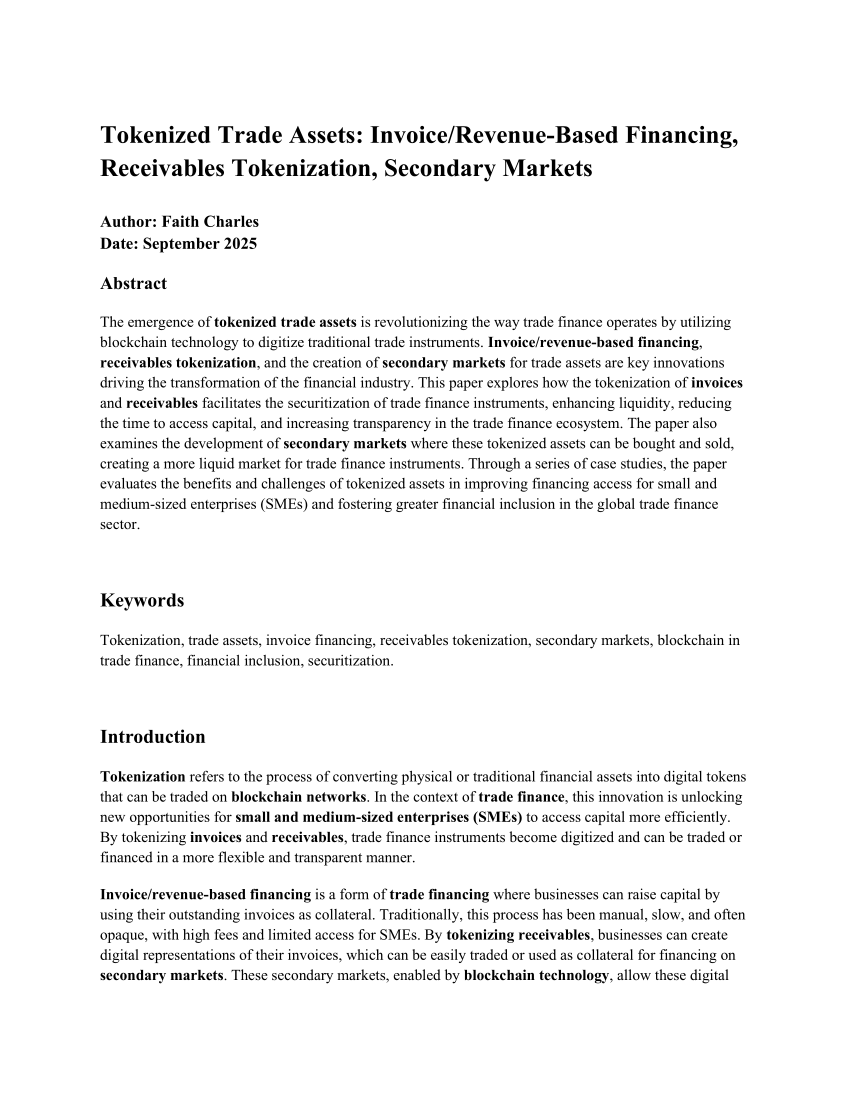
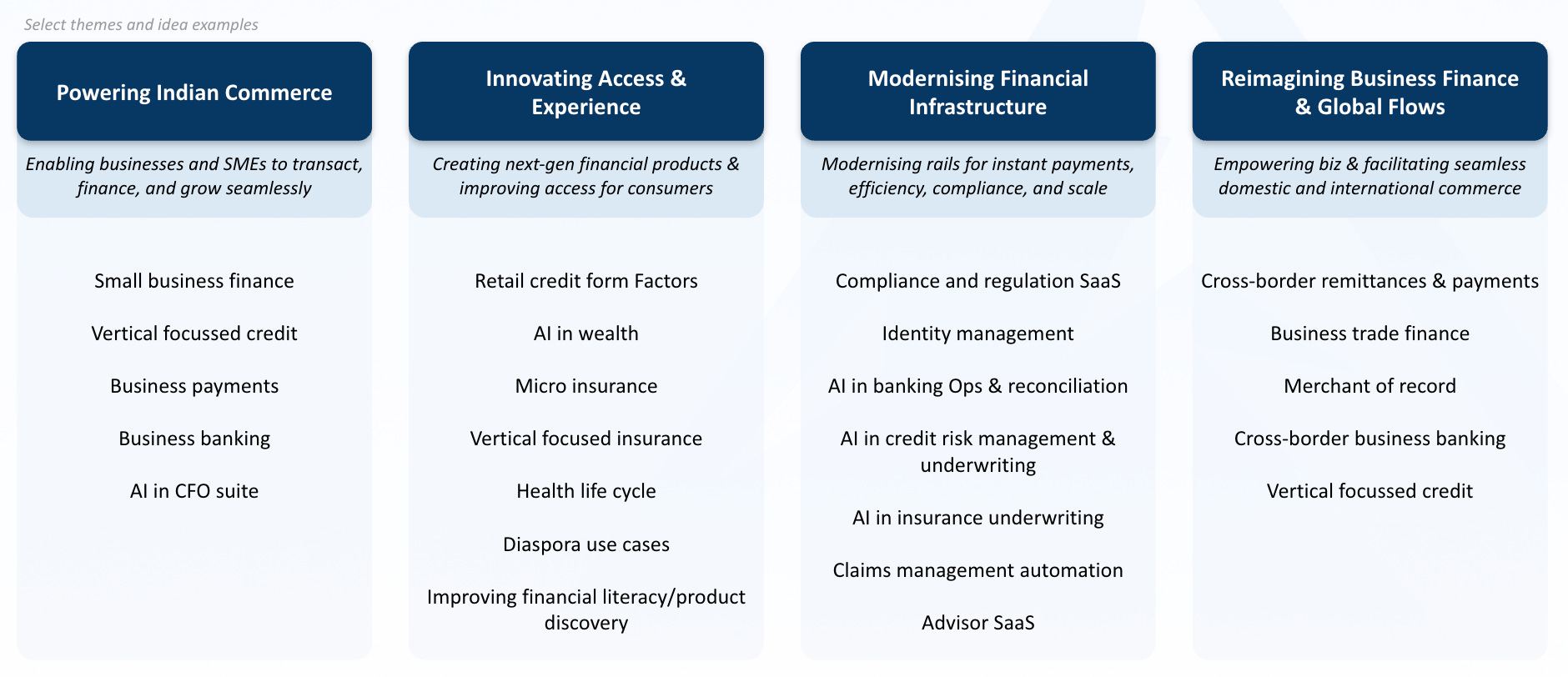
Understanding the mechanics of invoice tokenization requires moving beyond abstract concepts to practical application. The following books and software tools are widely regarded as essential for professionals entering this space.

As an Amazon Associate, we may earn from qualifying purchases.
These resources focus on the structural and technical aspects of tokenization, helping you evaluate platforms and understand the regulatory landscape. For real-time market context, monitor the performance of related real-world asset (RWA) tokens using provider-backed charts.
No comments yet. Be the first to share your thoughts!