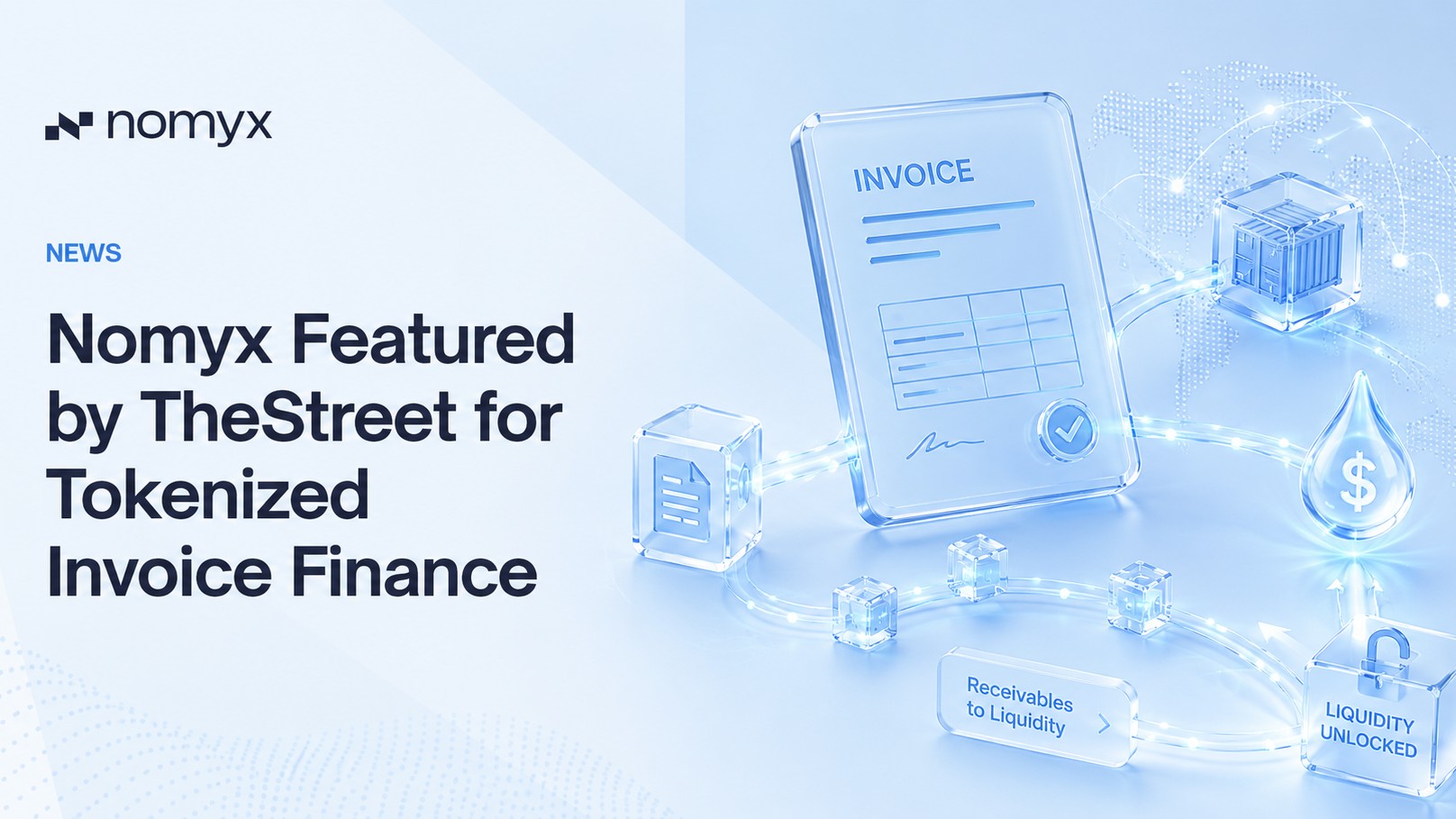
Tokenized Trade Finance Invoice Infrastructure
Building a tokenized trade finance infrastructure requires more than just a blockchain ledger. It demands a connected stack that bridges off-chain trade documents with on-chain financial instruments. The goal is to convert outstanding invoices into digital tokens that represent real-world assets, allowing them to be collateralized, traded, or financed across borders.
The infrastructure typically rests on four interconnected layers. First, an origin layer captures the trade event, digitizing invoices and purchase orders through ERP integrations. Second, a verification layer validates the authenticity of these documents, often using oracles or decentralized identity protocols to prevent fraud. Third, a tokenization layer mints the corresponding digital assets on a regulated blockchain, ensuring compliance with local securities laws. Finally, a liquidity layer connects these tokens to buyers, such as institutional investors or DeFi protocols, enabling immediate settlement.
This structure transforms illiquid receivables into tradable assets. By removing intermediaries and automating verification, companies can access working capital faster and at lower costs. The key challenge lies in standardizing data formats across different legacy banking systems to ensure seamless interoperability.
Tokenized Trade Finance Invoices: Tradeoffs and Trade-offs
Tokenizing trade finance invoices moves receivables from static ledgers to on-chain assets, but the switch introduces distinct operational and financial friction points. Buyers and lenders must weigh liquidity gains against implementation costs, regulatory ambiguity, and smart contract risks. The infrastructure promises real-time settlement, yet it requires robust KYC/AML rails and stablecoin liquidity to function effectively.
Liquidity vs. Capital Efficiency
On-chain tokens enable fractional ownership and 24/7 trading, unlocking capital trapped in traditional 60-90 day invoice cycles. However, this liquidity comes at a premium. Secondary markets often price tokenized invoices lower than bank discounts due to perceived smart contract risk and lower liquidity depth in niche chains. The trade-off is speed for yield: faster access to cash, but potentially higher effective borrowing costs compared to established factoring networks.
Regulatory Clarity vs. Compliance Complexity
Traditional trade finance operates within well-defined frameworks like UCP 600. Tokenization lacks universal legal precedent for on-chain title transfer. While some jurisdictions recognize digital assets, others treat them as unregistered securities. This ambiguity forces institutions to build hybrid compliance layers, integrating off-chain identity verification with on-chain automation. The result is increased operational overhead, offsetting some of the efficiency gains from automation.
Interoperability vs. Platform Lock-in
Most tokenization platforms operate in silos, limiting the ability to move invoices across different blockchain networks or banking systems. Proprietary standards can lock users into specific ecosystems, reducing flexibility. While cross-chain bridges exist, they introduce security vulnerabilities and latency. Organizations must choose between the security of a closed, permissioned network and the openness of public chains, each with distinct risk profiles.
Smart Contract Risk vs. Automation
Code automates payment triggers and title transfers, reducing manual errors and fraud. Yet, smart contracts are immutable; bugs or exploits can lead to irreversible losses. Traditional contracts allow for dispute resolution and renegotiation. On-chain, the "code is law" principle means errors in logic or oracle data feeds can result in incorrect settlements. Rigorous auditing and insurance are essential but add cost and complexity.
| Factor | Traditional | Tokenized | Primary Risk |
|---|---|---|---|
| Liquidity | Low (Bank-dependent) | High (Secondary Markets) | Price Volatility |
| Settlement Time | Days (T+3) | Seconds/Minutes | Oracle Failure |
| Regulatory | Established | Evolving | Legal Ambiguity |
| Interoperability | High (SWIFT) | Low (Siloed) | Platform Lock-in |
| Fraud Risk | Medium (Manual) | Low (Automated) | Smart Contract Bugs |
The shift to tokenized trade finance is not a simple upgrade but a structural change. Success depends on selecting platforms that balance innovation with regulatory compliance and robust security. Organizations should pilot tokenization with low-risk, high-volume invoices to test liquidity and operational fit before scaling.
Choose Your Tokenization Infrastructure Path
Tokenizing trade finance invoices isn't a single product purchase; it's an infrastructure decision that determines how your receivables move, who can see them, and where the liquidity comes from. The market in 2026 has settled into distinct architectural models, each with specific tradeoffs for speed, cost, and regulatory compliance. Selecting the wrong path can lock your assets into closed loops or expose your firm to unnecessary counterparty risk.
1. Private Permissioned Ledgers
This model uses enterprise-grade blockchains (like Hyperledger Fabric or Corda) for internal or consortium use. It offers the highest privacy and regulatory control, making it ideal for large banks managing intra-bank receivables or tight-knit supply chains. The tradeoff is liquidity: tokens remain trapped within the consortium and cannot be easily traded on broader markets. This is the safest starting point for institutions prioritizing compliance over open market access.
2. Public Chain Tokenization
Here, invoices are minted as tokens on public networks like Ethereum or Polygon. This maximizes liquidity by allowing any accredited investor to buy and sell the tokens. However, it requires navigating complex public compliance layers (KYC/AML at the token level) and dealing with higher gas fees. This path suits fintechs and specialized lenders who want to tap into deep, global capital pools rather than relying on a single bank's balance sheet.
3. Hybrid Bridge Models
Hybrid architectures connect private enterprise data to public settlement layers. Your internal ledger handles the complex trade details and privacy, while a public chain handles the final settlement and token transfer. This offers the "best of both worlds" but introduces significant technical complexity in data synchronization and oracle reliability. It is the preferred model for large-scale platforms aiming to bridge traditional trade finance (TradFi) with decentralized finance (DeFi) liquidity.
4. Tokenization-as-a-Service (TaaS)
Some providers offer white-label infrastructure where you plug into their existing tokenization rails. This reduces development time and compliance overhead significantly. However, you cede control over the underlying protocol and may face higher per-transaction fees. This is the fastest route to market for mid-sized firms that lack the engineering resources to build custom blockchain infrastructure but need immediate tokenization capabilities.


As an Amazon Associate, we may earn from qualifying purchases.
Avoid the weak options
Use this section to make the Tokenized Trade Finance Invoices decision easier to compare in real life, not just on paper. Start with the reader's actual constraint, then separate must-have requirements from details that are merely nice to have. A practical choice should survive normal use, maintenance, timing, and budget. If a recommendation only works in an ideal situation, call that out plainly and give the reader a fallback path.
The simplest way to use this section is to write down the must-have criteria first, then compare each option against those criteria before weighing nice-to-have features.
Tokenized trade finance invoices infrastructure: what to check next
Before committing capital or integrating new rails, teams need to separate the marketing narrative from the technical reality. The following answers address the specific operational and structural questions that arise when evaluating tokenized invoice infrastructure.
No comments yet. Be the first to share your thoughts!